


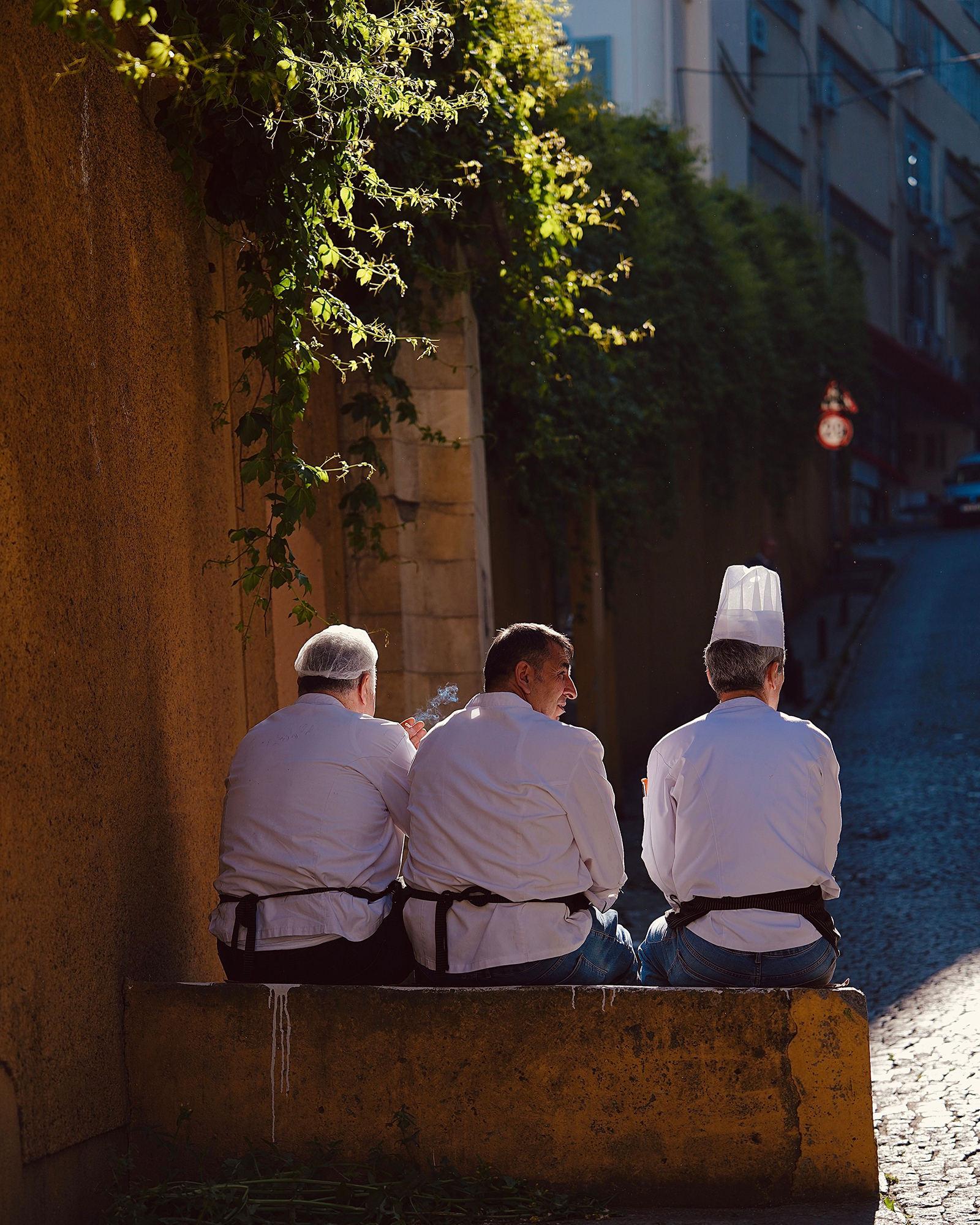
Why Is the Kitchen French?
The Brigade Trap: Why Is the Kitchen French, and What Comes After the Military Model?
How a 19th-century army hierarchy shaped the commercial kitchen—and why modern boutique hospitality is dismantling the Victorian factory to build a sensory stage.
- The Ghost in the Kitchen: The Military Origins of Gastronomy
Walk into virtually any commercial kitchen in London, New York, Tokyo, or Istanbul, and you will hear the same linguistic cadence: Chef, Sous, Mise en place, Saucier, Oui, chef.
The industry takes for granted that professional culinary spaces speak French. Most operators assume this is an organic tribute to classical gastronomy. In reality, it was an operational borrowing from 19th-century warfare.
In 1870, during the Franco-Prussian War, an army chef named Auguste Escoffier was stationed at the Rhine Army headquarters in Metz. Surrounded by siege and logistical chaos, Escoffier observed how military command structures maintained order under extreme stress: clear ranks, absolute chains of command, non-negotiable uniform discipline, and specialized division of labor.
Two decades later, when hotelier César Ritz partnered with Escoffier to manage the kitchens of London’s Savoy and Paris’s Ritz, Escoffier imported the battlefield directly into the hotel basement. He created the Brigade de Cuisine (kitchen brigade).
The kitchen was carved into military battalions: the Chef de Cuisine (General), Sous Chef (Colonel), Chefs de Partie (Captains overseeing discrete stations: saucier, poissonnier, rôtisseur, entremetier, garde manger), down to the commis (foot soldiers) and plongeurs.
[ Auguste Escoffier (1870–1890) ]
Franco-Prussian War Military Hierarchy
│
▼
[ The Brigade de Cuisine ]
Strict Division of Labor • Factory Standardization • Taylorism
│
▼
19th-Century Problem: High-Volume Victorian Banquets
21st-Century Problem: Sensory & Emotional Disconnection
- The Taylorist Assembly Line vs. The Holistic Palate
Escoffier was not merely an artist; he was the culinary equivalent of Frederick Winslow Taylor and Henry Ford.
Before Escoffier, kitchens operated in chaotic clusters where cooks prepared complete dishes from start to finish. In the grand hotels of the Belle Époque, where 500 wealthy patrons demanded simultaneous service, that artisanal model broke down. Escoffier solved the throughput crisis by fragmenting the plate into an assembly line.
If a table ordered Tournedos Rossini, no single individual prepared the dish:
- The boucher butchered the tenderloin.
- The rôtisseur or saucier seared the beef and sautéed the foie gras.
- The saucier executed the Madeira reduction.
- The entremetier prepared the crouton.
- The chef or aboyeur (announcer) assembled the components on the pass.
This industrial division of labor achieved unprecedented speed, consistency, and margin efficiency. However, it introduced a deep structural flaw: it severed the sensory connection between cook and guest.
Sociological research on commercial culinary hierarchies reveals that the traditional brigade relied heavily on institutionalized fear, docility, and rigid obedience to reproduce tasks identically. When a cook is confined to a single station executing isolated micro-tasks, they do not taste the holistic narrative of the dining room. They do not hear the room’s acoustic rhythm, see how the plate interacts with the table’s lighting, or sense how the guest experiences the moment.
The French kitchen was engineered like a submarine engine room: dark, loud, hierarchical, hidden from sight, and insulated from human emotion.
- The Collapse of the Victorian Model in Boutique Hospitality
For 20th-century hotel chains and high-volume corporate restaurants, the French brigade remains the ultimate operational blueprint. But for the visionary boutique investor, the military factory model has become a strategic trap.
| The Victorian Brigade (Corporate Formula) | |
| Organizational Philosophy | Militaristic command-and-control; vertical hierarchy |
| Spatial Architecture | Enclosed “boiler room”; hidden behind swinging service doors |
| Culinary Objective | Mechanized consistency, high volume, throughput |
| Sensory Feedback Loop | Broken (cooks never observe guest reactions) |
| Guest Perception | Food as a delivered manufacturing product |
In an intimate, 40-to-60 seat dining room, guests do not visit simply to consume calories; they seek what the Feel Brand Book defines as Multisensory Immersion. When dining becomes experiential, walling off the cooking process behind swinging metal doors destroys the primary visual and olfactory drama of the evening.
- Phase III Choreography: Back-of-House Rhythm Re-Engineered
In the Phases of Feel framework, kitchen design is not treated as mere MEP (mechanical, electrical, plumbing) equipment placement. It is architected within Phase III: Choreography (İşleyiş) under the Back-of-House Rhythm pillar.
Instead of treating the kitchen as a Victorian engine room, progressive boutique stages curate the kitchen as an open theatrical laboratory:
- Acoustic Dampening & Sound Masking: In a traditional French kitchen, clattering stainless steel, screaming expeditor calls, and industrial ventilation create cognitive chaos. In a curated culinary stage, sound-absorbing ceiling geometries and induction cooking eliminate industrial noise pollution, preserving the room’s intimate acoustic frequency.
- Olfactory Flow Management: Rather than exhausting all aromas into exterior ducting, calibrated HVAC currents pull appetizing, wood-smoke or roasting aromas past the guest threshold as an olfactory lure (Smell/Lure), while capturing harsh grease vapors at the source.
- Ergonomic Choreography Over Military Rigidity: Modern research on high-performance culinary teams confirms that continuous innovation and creative mastery thrive on collaborative docility and shared learning, rather than top-down intimidation. Eliminating siloed stations allows chefs to rotate, plate tableside, and engage directly with the humans they are feeding.
[ Traditional French Brigade ]
Kitchen Isolated Behind BOH Partition
Noise • Heat • Fear • Disconnected Plate
[ Feel Culinary Stage ]
Unified Guest-Kitchen Experience Map
Curated Sightlines • Clean Acoustics • Real-Time Dialogue
- Beyond Escoffier: The Future of the Culinary Stage
Auguste Escoffier was a genius of his era. He gave the culinary world professional dignity, uniform hygiene, and unmatched speed for the Industrial Age.
However, modern boutique operators are no longer running Victorian grand hotels. As outlined in The Visionary’s Crossroads: Building a Culinary Stage vs. Buying a Corporate Formula, corporate formulas rely on standardized replication because they must scale across hundreds of identical locations.
Visionary independent venues do not need military regiments. They need coordinated ensembles.
When you deconstruct the French brigade and replace industrial compartmentalization with human-centered sensory choreography, the kitchen ceases to be a factory. It becomes what it was always meant to be: the beating heart of the sensory world.
References
- Edwards, P., & Ramsay, G. (2013). Docility, Collaborative Learning, and Continuous Innovation: A Case Study of Celebrity Chefs. ResearchGate. View Publication
- DeSoucey, M., & Demetry, D. (2016). The Function of Fear in Institutional Maintenance: Feeling frightened as an essential ingredient in haute cuisine. Organization Studies. View ResearchGate Article
- Miočić, P., et al. (2021). Becoming a Chef: The Basis of Culinary Trade and Technics. HotelPlan. View Research
- Feel Consulting Methodology & Frameworks:


