


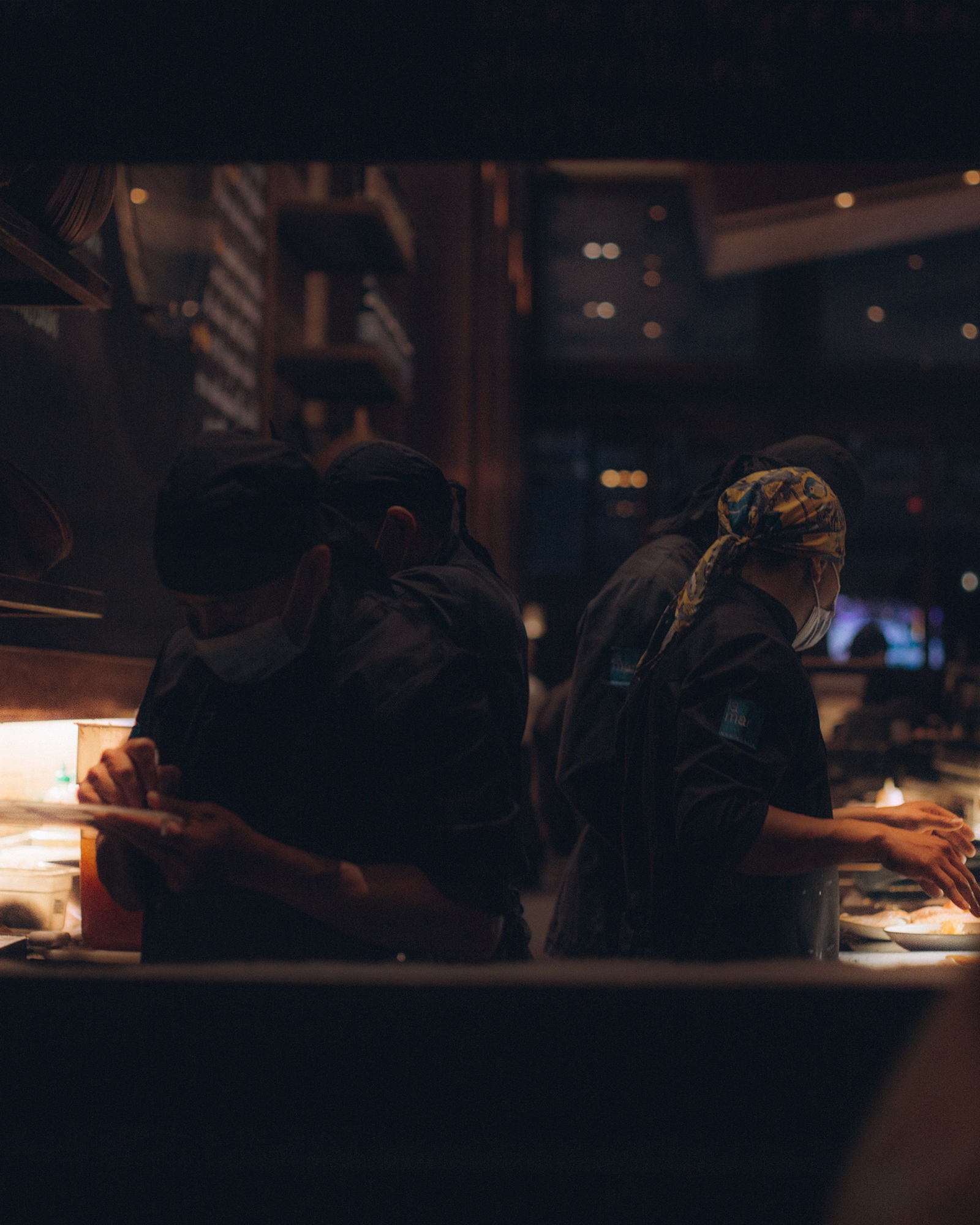
the Big Menu Paradox
The Tyranny of Versatility: Mental Load, Decision Fatigue, and the Power of Curated Constraint
Why an oversized menu dulls your guests’ taste perception—and how disciplined culinary curation drives deeper memory and healthier margins.
1. The Anxiety of Abundance: Why Versatility Is a Burden
When launching or scaling a hospitality concept, one of the most common instincts is to build an expansive menu that tries to offer something for everyone. Driven by the fear of turning away a hypothetical guest, operators often pad their offerings with dozens of dishes spanning incompatible culinary traditions, textures, and techniques. While a massive menu does not automatically doom a business—just as a compact menu does not guarantee survival on its own—sprawling versatility is a major setback across ingredient stock, kitchen labor, cost control, and guest perception.
In practice, excessive versatility is not a safety net—it is a burden for both you and your guests.
When a guest steps onto a bespoke culinary stage, they are looking for multisensory immersion: the warmth of a calibrated 2200K spotlight, the grounding tactile weight of heavy cotton rag paper, and the savory aroma of wood smoke drifting from the pass. Handing that guest a multi-page inventory of options immediately pulls them out of the sensory moment and forces them into analytical work. Instead of feeling the space, they are forced to audit a catalog.
2. The Mental Tax: How Decision Fatigue Dulls Taste
One of the most surprising findings in modern gastrophysics is that mental effort does not merely test a guest’s patience—it physically dulls their ability to taste your food.
In a series of experiments published in Psychological Science, researchers Reine van der Wal and Lotte van Dillen demonstrated that taxing a person’s mind with heavy mental load directly reduces their sensitivity to taste (Van der Wal & Van Dillen, 2013). Because the human brain has a limited pool of attention, the mental effort spentcomparing dozens of menu items competes directly with the senses. When a guest experiences decision fatigue while navigating an over-engineered menu, their taste perception is noticeably muted—meaning sour, sweet, and savory notes register as flatter on the palate (Van der Wal & Van Dillen, 2013).
Compounding this effect is choice overload. Building on Sheena Iyengar and Mark Lepper’s classic study showing that trimming an assortment from 24 options to 6 increased actual purchases tenfold (Iyengar & Lepper, 2000), hospitality researchers at Bournemouth University tested how many dishes guests actually want to see on a menu. Their findings were clear: for an intimate, high-detail culinary stage, guest satisfaction peaks at 6 starters, 7 main courses, and 6 desserts (Johns, Edwards, & Hartwell, 2013).
Once a menu exceeds seven options per category, second-guessing sets in (Chernev, Böckenholt, & Goodman, 2015). Even while eating a well-executed dish, the guest remains distracted by the unchosen alternatives, lowering their satisfaction with the meal and weakening the memory of the evening.
| Menu Architecture | Guest & Sensory Impact | Back-of-House Choreography | Financial & Brand Outcome |
| Hyper-Versatile (30+ Dishes) | High mental fatigue; muted taste perception; post-order second-guessing (Van der Wal & Van Dillen, 2013) | Fragmented prep; muddled kitchen aromas; slower pass rhythm | Heavy stock burden & spoilage; higher labor cost; diluted culinary identity |
| Curated Constraint (6–7 per Course) | Effortless ordering; heightened flavor perception; stronger memory retention (Johns et al., 2013) | Synchronized station flow; consistent execution; focused vendor procurement | Minimized food waste (Jelly, 2026); clear brand authority; healthier margins |
3. Descriptive Power: Depth Over Breadth
When you free a menu from sheer volume, you gain the space to elevate Taste (Keep wanting more) through intentional storytelling.
Research by Brian Wansink, Koert van Ittersum, and James Painter shows that evocative, sensory-specific menu descriptions—highlighting origin, preparation method, and textural contrast—elevate perceived flavor ratings and increase guest willingness to pay by 27% compared to plain listings (Wansink, Van Ittersum, & Painter, 2005).
In a bloated 45-item menu, every dish is squeezed into a cramped line of plain text. In a curated 15-item menu printed with generous breathing room (“visual silence”), each dish commands attention. Mentioning the crackle of blistered sourdough crust or the earthy aroma of cold-smoked wild mushrooms awakens the guest’s appetite and imagination before the first course ever leaves the kitchen.
4. Phase II & Phase III: How Menu Constraint Elevates Spatial Choreography
Within the Phases of Feel methodology, menu architecture sits at the intersection of Phase II: Content (Culinary & Spatial Flow) and Phase III: Choreography (Back-of-House Rhythm & Vendor Strategy):
-
Olfactory Clarity (Smell / Lure): A kitchen executing a focused repertoire produces a clean, unmistakable aromatic signature—such as charred oak, roasted bone marrow, and browned butter—that can be intentionally routed toward the entrance. A kitchen juggling forty unrelated recipes produces conflicting kitchen odors.
-
Tactile Curation (Touch / Focus): When your culinary repertoire is disciplined, you can select bespoke stoneware and weighted cutlery tailored to each dish on the menu, rather than buying generic all-purpose plates to cover dozens of items.
-
Back-of-House Rhythm & Margin Protection: Cutting slow-moving menu bloat reduces stock complexity, lowers kitchen labor strain, slashes perishable food waste (Jelly, 2026), and allows your team to source peak-season ingredients from dedicated producers.
5. The Feel Culinary Verdict: Scarcity Commands Authority
As we explored in The Visionary’s Crossroads: Building a Culinary Stage vs. Buying a Corporate Formula, mass-market chains often rely on endless menu combinations to create the illusion of variety out of standardized freezer stock.
For the visionary boutique hospitality investor, true luxury lies in curated constraint. Guests do not visit an intimate culinary stage to be burdened with work; they come to surrender their senses to an expert. By paring your menu down to a focused, intentional narrative, you remove the mental friction, sharpen the palate, and turn a meal into a lasting memory.
References
-
Chernev, A., Böckenholt, U., & Goodman, J. (2015). Choice overload: A conceptual review and meta-analysis. Journal of Consumer Psychology, 25(2), 333–358.
-
Feel Culinary Sense Designer. (2026). Phases of Feel — Professional Services Manual.
-
Feel Culinary Sense Designer. (2026). The Visionary’s Crossroads: Building a Culinary Stage vs. Buying a Corporate Formula.
-
Iyengar, S. S., & Lepper, M. R. (2000). When choice is demotivating: Can one desire too much of a good thing? Journal of Personality and Social Psychology, 79(6), 995–1006.
-
Jelly. (2026, July 1). Menu engineering to reduce food waste in restaurants. Jelly Blog.
-
Johns, N., Edwards, J. S. A., & Hartwell, H. J. (2013). Menu choice: Satisfaction or overload? Journal of Culinary Science & Technology, 11(3), 275–285.
-
Van der Wal, R. C., & Van Dillen, L. F. (2013). Leaving a flat taste in your mouth: Task load reduces taste perception. Psychological Science, 24(7), 1277–1284.
-
Wansink, B., Van Ittersum, K., & Painter, J. E. (2005). How descriptive food names bias sensory perceptions in restaurants. Food Quality and Preference, 16(5), 393–400.


