


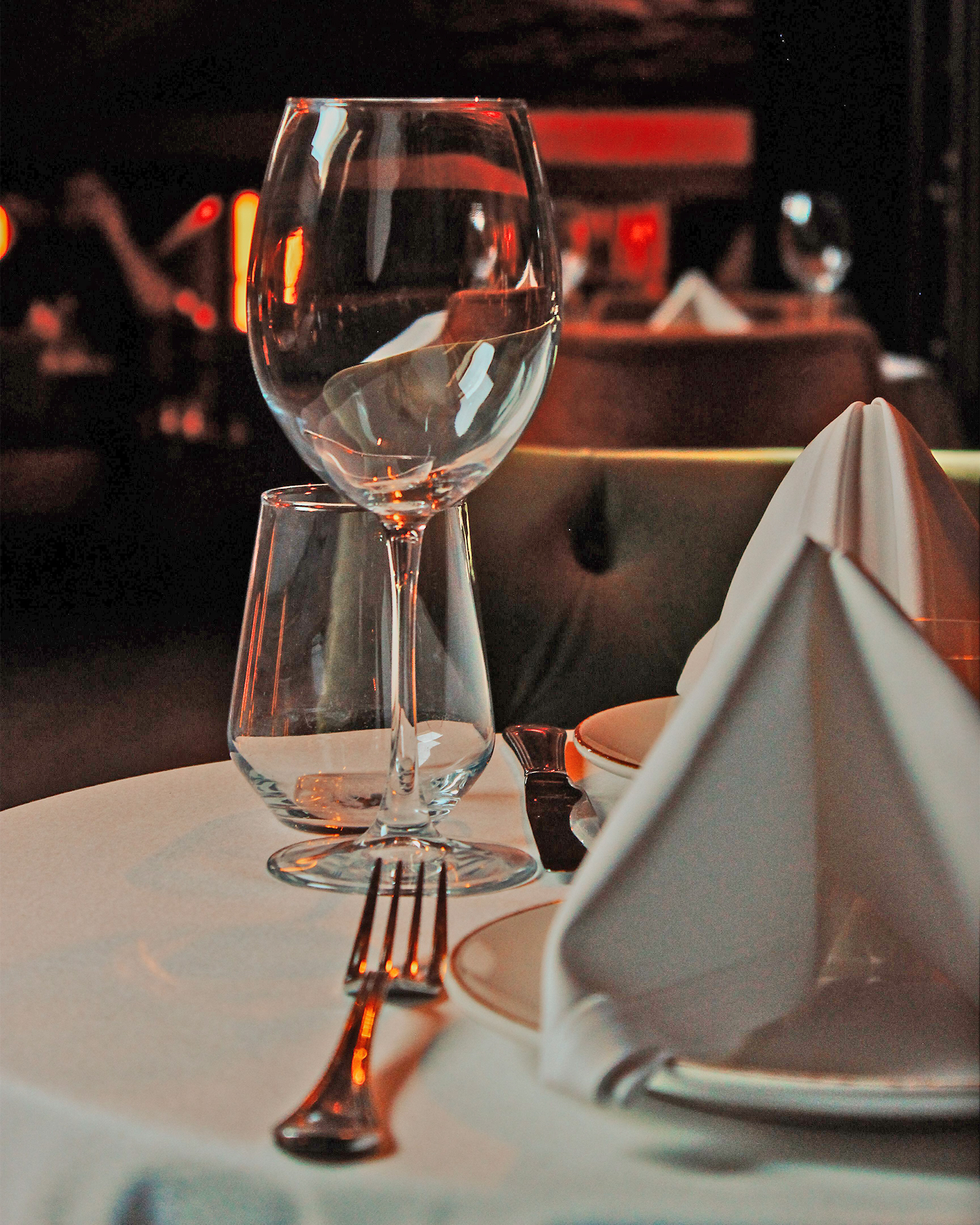
The Haptic Table
The Haptic Table: The Neuroscience of Weight, Texture, and the Forgotten Sense in Culinary Design
Why the plate is not neutral—and how tactile curation transforms perceived flavor into sustained guest loyalty.
1. Introduction: The Plate Is an Active Interface, Not a Canvas
In mainstream hospitality, tableware is almost universally relegated to the realm of passive aesthetics or utilitarian logistics. Operators debate glaze colors to match upholstery, select durable porcelain for industrial dishwashers, and purchase cutlery out of commercial supply catalogs. The underlying assumption is as pervasive as it is flawed: the vessel is merely an inert canvas for the chef’s culinary art.
Cognitive neuroscience and gastrophysics reveal a very different reality.
Human taste is not an isolated chemical phenomenon restricted to the papillae of the tongue. It is a synthesized multisensory calculation executed in the insular and orbitofrontal cortices. Long before food is masticated, tactile receptors in the fingertips, lips, and palms transmit proprioceptive and somatosensory signals that directly calibrate flavor expectations and neural taste decoding.
When a guest interacts with a physical dining object—lifting a fork, running fingers across the unglazed lip of a stoneware vessel, or gripping the stem of a glass—the brain’s somatosensory system fires synchronously with the gustatory cortex. In a boutique culinary stage, the physical interface is not neutral. It is an active sensory amplifier.
- Haptic Priming – Proprioceptive / Tactile Cues (Cutlery Weight, Surface Texture)
- Crossmodal Integration – Somatosensory Cortex (primes taste receptors)
- Gustatory Evaluation – Orbitofrontal Cortex (Flavor, Density, Perceived Value)
2. The Weight of Perception: Cutlery and Vessels as Value Anchors
Among all tactile dimensions, weight exerts the most profound psychological and neurological leverage over perceived quality.
The Cutlery Weight Phenomenon
In a landmark crossmodal gastrophysics experiment published in Flavour, researchers discovered that when guests were served an identical meal using substantial, perfectly balanced cutlery compared to standard banquet utensils, they rated the food as significantly tastier, more artistically presented, and were willing to pay up to 15% more for the exact dish.
Utensil mass acts as a subconscious cognitive anchor. When an operator curates a culinary stage with heavy, ergonomically grounded cutlery, the guest’s nervous system instinctively attributes that physical heft to the culinary composition itself. It implies gravity, deep artisanal craft, and uncompromised intention.
However, the impact of weight extends far beyond a simple binary of mass equating to luxury; the tactile profile must flawlessly align with the complex flavor expectations of the cuisine. Unintentional, lightweight, flexible, or hollow-handled cutlery triggers what sensory marketing pioneer Aradhna Krishna identified as negative haptic transfer. When a guest interacts with this flimsy, abrasive friction, the subconscious impression directly lowers their taste expectation, muting the perceived freshness, acidity, and vibrancy of the consumable.
Conversely, highly intentional, lightweight curation can be profoundly evocative. A meticulously sourced, ultra-light hand-carved wooden spoon or a delicate bamboo fork does not signal a lack of quality—it signals a distinct, intimate narrative. The delicate, organic warmth of the wood can bypass the analytical brain, acting as a tactile trigger that instantly transports a guest back to a remote coastal village they visited in the 90s. In a true multisensory immersion, the physical weight of the tool does not just deliver food; it actively constructs a deep, episodic memory.
Vessel Mass and Perceived Satiety
This principle extends directly to bowls, plates, and glassware. Research on container weight demonstrates that increasing the physical weight of a bowl measurably increases expected satiety and perceived flavor intensity.
When serving rich broths, reductions, or signature grains in an intimate tasting menu, serving the course in an earthen vessel with substantial mass alters how the human nervous system processes portion size and density, creating an impression of deep culinary richness.
3. Surface Friction, Micro-Textures, and Metallurgy: The Palate’s Tactile Echo
Beyond mass, the micro-topography of materials—their friction, roughness, thermal conductivity, and chemical composition—actively modulates basic taste perception.
The Roughness-to-Sweetness Spectrum
Neuropsychological research on crossmodal tactile-taste interactions demonstrates that tactile surface texture directly alters the perception of taste attributes:
-
Micro-Rough Surfaces (Unglazed Stoneware, Raw Ceramics): Crossmodally amplify perceived crispness, savory umami depth, astringency, and textural crunch.
-
Smooth, Polished Surfaces (Fine Bone China, Glazed Porcelain): Crossmodally enhance perceived creaminess, sweetness, and mouthfeel smoothness.
When pairing a charred, wood-fired protein or wild-foraged vegetable with an unglazed, volcanic-textured ceramic vessel, the guest’s tactile exploration reinforces the primal, earthy terroir of the dish. Conversely, serving a delicate cultured cream or floral emulsion on a rough, abrasive surface creates sensory discord that degrades flavor clarity.
| Material / Tactile Cue | Somatosensory Signal | Crossmodal Flavor Impact | Strategic Culinary Application |
| Heavy-Gauge 18/10 Steel / Silver | Substantial mass, balance | Heightened perceived value, richness | Core savory mains, signature meats |
| Unglazed Raw Stoneware / Terracotta | Organic friction, warmth | Amplified savory depth, terroir, crispness | Wood-fired courses, grains, heirloom roots |
| Ultra-Thin Hand-Blown Crystal | Minimal thermal barrier, elegance | Heightened aromatic acidity and precision | High-altitude wines, clarified broths |
| Warm Washed Linen / Raw Timber | Natural grain, grounded tactile comfort | Reduced cognitive stress, extended dwell time | Communal tables, bread courses, tea services |
Utensil Metallurgy and Ionic Micro-Currents
One of the most surprising insights in culinary physics involves the material composition of utensils. Research led by materials scientist Zoe Laughlin into the taste of solid metals revealed that different metals possess distinct taste profiles driven by their standard electrode potentials:
-
Gold and Silver: Chemically inert; deliver zero metallic interference, allowing pure acidic and sweet nuances to express unhindered.
-
Copper and Brass: Impart a distinct metallic bitterness that can paradoxically heighten perceived sweetness in desserts.
-
Zinc and Low-Grade Stainless: Can impart harsh astringency when in contact with acidic food components.
In a meticulously crafted tasting menu, selecting the specific metal or ceramic material of a spoon for an amuse-bouche or palate cleanser is as consequential as adjusting salt salinity.
4. Operationalizing Haptics: Phase II Tactile Curation
In the Phases of Feel framework, haptics is not treated as an afterthought; it is integrated directly into Phase II (Atmospheric & Sensory Curation) under the Touch (Focus) pillar.
Touchpoint 1 – Threshold & Entry – Hand-carved wood / cold metal (Establishes transition & intent)
Touchpoint 2 – Tabletop & menu – Heavyweight tactile paper (Primes intellectual value)
Touchpoint 3 – Vessel & Cutlery – Balanced weight & curated textures (Amplifies flavor & price perception)
The Spatial Haptic Journey
Tactile curation begins long before the first plate arrives:
-
The Threshold Transition: The material of the entryway door pull—whether cool cast bronze, textured blackened iron, or hand-planed hardwood—physically grounds the guest upon arrival, transitioning them out of the cognitive clutter of the street.
-
The Tactile Menu: A menu printed on lightweight coated cardstock communicates mass production. Using heavy, textured cotton rag or handmade mulberry paper primes the guest to expect craftsmanship and artisanal scarcity.
-
Tabletop Contact Surfaces: The temperature conductivity of the table—the warm, absorbent give of natural linen versus the cool, grounding stability of solid walnut or honed slate—dictates physical relaxation and arm placement throughout the evening.
-
Bespoke Artisan Collaboration: Unlike mass-market franchise dining, boutique culinary stages possess the structural agility to commission bespoke ceramicists and metalsmiths to produce vessel profiles tailored precisely to the culinary vision.
5. The Commercial ROI of Touch: Why Tactile Memory Drives Loyalty
The human sensory architecture is wired to remember what it touches. In cognitive psychology, physical contact establishes a subconscious sense of psychological ownership and emotional valuation.
When a dining experience delivers coherent multisensory harmony—where the weight of the fork, the friction of the stone plate, the Kelvin temperature of the light, and the flavor of the food all tell a singular, unified story—the experience transitions from a simple meal into an indelible memory.
As outlined in The Visionary’s Crossroads: Building a Culinary Stage vs. Buying a Corporate Formula, corporate formulas rely on visual gimmicks and cost-engineered efficiencies. Visionary culinary stages win by mastering the invisible dimensions of human biology.
True luxury is felt. When you curate the tactile world with scientific precision, you craft an experience that guests cannot replicate at home—and one they will return to time and again.
Scholarly & Industry Resources
-
Velasco, C., & Spence, C. (2018). Multisensory Technology for Flavor Augmentation: A Mini Review. Frontiers in Psychology. View Research
-
Harrar, V., & Spence, C. (2013). The taste of cutlery: how the taste of food is affected by the weight, size, shape, and colour of the cutlery used to eat it. Flavour, 2(1). View ResearchGate Article
-
Krishna, A., & Morrin, M. (2008). Does Touch Affect Taste? The Perceptual Transfer of Product Container Haptic Cues to Product Evaluation. Journal of Consumer Research, 34(6), 807–818. View Publication
-
Piqueras-Fiszman, B., & Spence, C. (2012). The weight of the container influences expected satiety, perceived density and fairness of food pricing. Food Quality and Preference. View PubMed Abstract
-
Slocombe, B. G., Carmody, M. T., & Spence, C. (2016). Cross-modal tactile–taste interactions in food evaluations. Neuropsychologia, 88, 58–69. View PMC Article
-
Laughlin, Z., Conreen, M., Witchel, H., & Miodownik, M. (2011). The use of standard electrode potentials to predict the taste of solid metals / Tasting spoons. Food Quality and Preference. View Semantic Scholar Reference


